Snow Removal Based on Actual Load
Roof Snow Removal in Brimley for homes and outbuildings facing structural risk from lake-effect snow accumulation
U.P. lake-effect snowfall regularly exceeds residential roof load ratings, which means waiting too long to remove snow can cause deck damage or collapse. Timely removal decisions are based on snow density and load, not just visible depth. LCI Maintenance and Repair handles roof snow removal for residential and commercial properties across the Eastern U.P., protecting roofs from both over-removal damage and under-removal collapse risk. Properties in the Six Mile Road area and Brimley Township see heavy, wet snow that packs down fast and adds weight quickly.
The removal process starts with assessing snow density, roof pitch, and structural capacity to determine when load crosses the threshold for safe clearing. Different roof designs handle snow loads differently, so every roof is treated based on its actual capacity rather than a one-size-fits-all depth rule.
Request an on-site evaluation to determine current snow load and removal timing for your property.
What Changes After Snow Load Is Removed
Roof snow removal reduces the weight pressing down on roof decking and trusses, preventing the sagging, cracking, and structural stress that lead to collapse. LCI makes removal decisions based on load risk, not just how the snow looks from the ground. This approach protects roofs from unnecessary surface damage while addressing real structural danger.
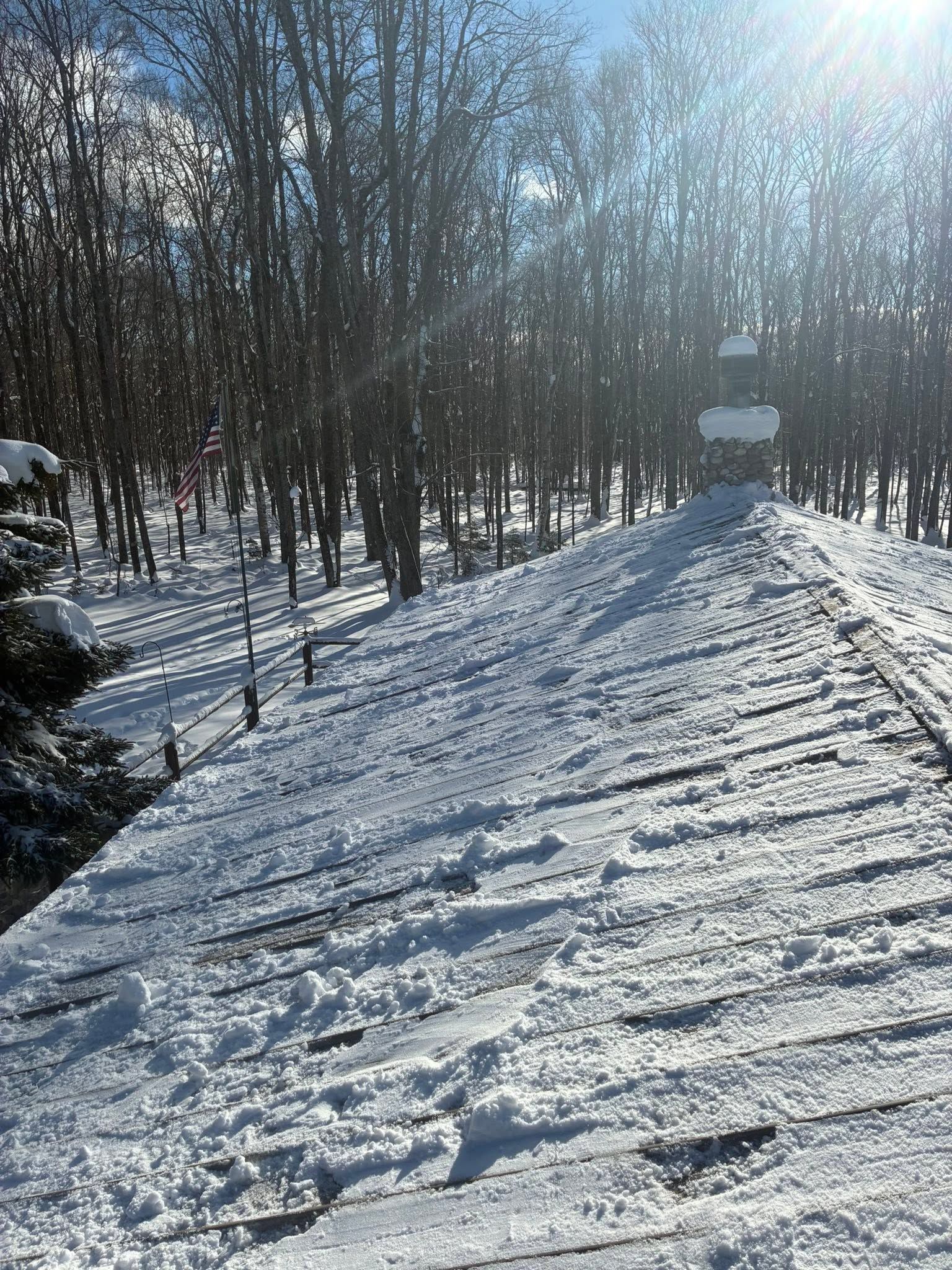
Once the snow is cleared, you see a roof free of dangerous accumulation, with no sagging ridgelines or stressed eaves. The building interior stays safe, and the roof structure no longer carries weight it was not designed to support. Removal is done without tearing shingles or damaging flashing, so the roof remains intact and functional.
Lake-effect snow in the Eastern U.P. often carries higher water content than light, fluffy snow, which means depth alone does not tell the full story. Load-based removal decisions account for density and weight, not just how many inches are visible.
Answers to Frequent Service Questions
Homeowners and property managers in Brimley regularly ask about snow load thresholds, removal methods, and timing decisions.
How do you know when snow load becomes dangerous?
Load is calculated based on snow depth, density, and the roof's pitch and structural design. Wet, heavy snow creates more load per inch than dry powder, and flat or low-slope roofs reach capacity faster than steep pitches.
What happens if snow is removed too early or too often?
Repeated clearing can damage shingles, flashing, and roof edges, especially if tools scrape the surface. LCI removes snow only when load risk justifies it, protecting the roof from unnecessary wear.
Why does lake-effect snow in Brimley create higher roof loads?
Lake-effect snow near Whitefish Bay often falls wet and heavy, with high water content that increases weight significantly. A foot of wet snow can weigh two to three times more than a foot of dry snow farther inland.
What types of buildings need professional snow removal?
Residential homes, garages, pole barns, and commercial structures with flat or low-slope roofs all face collapse risk during heavy snow seasons. Buildings with older or undersized framing are especially vulnerable.
How quickly can snow removal be scheduled during heavy snowfall?
Response time depends on current weather and service demand, but LCI prioritizes properties showing visible stress or structural warning signs like sagging rooflines or cracked interior ceilings.
LCI Maintenance and Repair treats every roof differently based on its actual load capacity and snow conditions. Contact LCI to schedule removal before structural damage develops.